


To store rice and dal long-term without insects, start with dry, clean grain, freeze it for 3–4 days to kill any hidden eggs, and then keep it in airtight glass or steel containers in a cool, dry place. Adding natural repellents like dried neem leaves, bay leaves, cloves or dried red chillies gives extra protection. Most insect problems begin with eggs that were already in the grain when you bought it, so stopping them at the start matters more than anything you do later.
If you have ever opened a dabba of toor dal and found tiny black beetles, or seen fine webbing in your rice, you know how frustrating it is. The good news is that you can prevent it almost completely with a few simple habits. No chemicals needed.
Why insects get into rice and dal
The insects you find in stored grain usually do not crawl in from outside. In most cases, their eggs are already inside the grain when it comes home from the shop or mill. Given warmth and moisture, those eggs hatch, and within a few weeks you have a full infestation.
The most common culprits in Indian kitchens are:
- Rice weevils: Small dark brown beetles with a long snout. The female drills into a single grain of rice and lays an egg inside it, which is why you often see hollowed grains and fine powder.
- Pulse beetles (dal beetles): Round, brownish beetles that attack whole pulses like chana, moong, rajma and toor. You will notice small round holes in the grains.
- Indian meal moths: Tiny moths that leave silky webs and clumps in rice, atta and dal.
- Red flour beetles: Reddish-brown beetles that feed on broken grains, flour and powder at the bottom of containers.
All of them thrive on the same three things: moisture, warmth and air. Take those away and they cannot survive or multiply. That is the whole principle behind every method below.
Step 1: Buy clean grain
Good storage starts at the shop. Before you buy, check for:
- Holes in the grains, powdery residue, or clumps stuck together with webbing
- A musty or stale smell
- Live or dead insects in the bag or sack
If you buy from loose bins, pick a busy shop where stock moves quickly. Old stock that has been sitting for months is far more likely to have eggs in it. Buy in quantities you can reasonably finish within your storage period, instead of one giant sack that sits open for a year.
Step 2: Dry the grain thoroughly
Moisture is the biggest enemy of stored grain. Even slightly damp rice or dal gives eggs the conditions they need to hatch, and it can also lead to fungus.
The traditional way to dry grain still works best:
- Spread the rice or dal in a thin layer on a clean cotton cloth or steel plate.
- Keep it in direct sunlight for 4–6 hours, stirring once or twice.
- Let it cool completely to room temperature before storing. Storing warm grain creates condensation inside the container, which defeats the purpose.
Sunlight also drives out many adult insects, and the heat can kill some eggs near the surface. This is especially useful before the monsoon, when humidity rises sharply in places like Kerala, Mumbai and the coastal belt.
Step 3: Freeze to kill hidden eggs
This is the step most people skip, and it is the most effective one. Freezing kills insect eggs and larvae hidden inside the grains, which drying alone cannot always reach.
How to do it:
- Pack the rice or dal in a sealed zip-lock bag or airtight container.
- Keep it in the freezer for 3 to 4 days.
- Take it out and let it come to room temperature while still sealed. This stops moisture from the air condensing on the cold grain.
- Once it is at room temperature, open it and transfer it to your storage container.
If your freezer is small, freeze in batches of 1–2 kg at a time. Doing this once when you bring new stock home solves most infestation problems before they start.
Step 4: Use the right containers
Once the grain is clean and dry, the container decides how long it stays that way. You want something airtight, so insects cannot get in and humidity cannot seep in.
| Container type | How well it works | Best for |
|---|---|---|
| Glass jars with rubber-sealed lids | Excellent. Airtight, easy to spot insects, no smell | Dal, small quantities of rice |
| Stainless steel dabbas with tight lids | Very good. Durable and blocks light | Rice, dal, daily-use stock |
| Food-grade plastic airtight containers | Good, if the seal is strong | Large quantities, bulk rice |
| Vacuum-sealed bags | Excellent for long-term, removes air entirely | Stock you will not open for 6+ months |
| Original plastic or jute bags | Poor. Insects chew through and air gets in | Avoid for long-term storage |
A few container rules that make a real difference:
- Wash and dry containers completely before refilling. Never pour new grain on top of old grain, because any eggs in the old stock will spread to the new.
- Fill containers close to the top. Less air inside means less room for insects and moisture.
- Use smaller containers for daily use and keep your bulk stock sealed. Every time you open a container, you let in air and humidity.
Step 5: Add natural insect repellents
Once your grain is clean and sealed, natural repellents add a second layer of protection. Most of these are traditional Indian methods that grandmothers have used for generations, and they work because insects dislike their strong smell.
- Dried neem leaves: The most trusted method. Dry a handful of fresh neem leaves in the shade (not in harsh sun, so they keep their oils) and place them between layers of rice or dal. Replace them every 2–3 months.
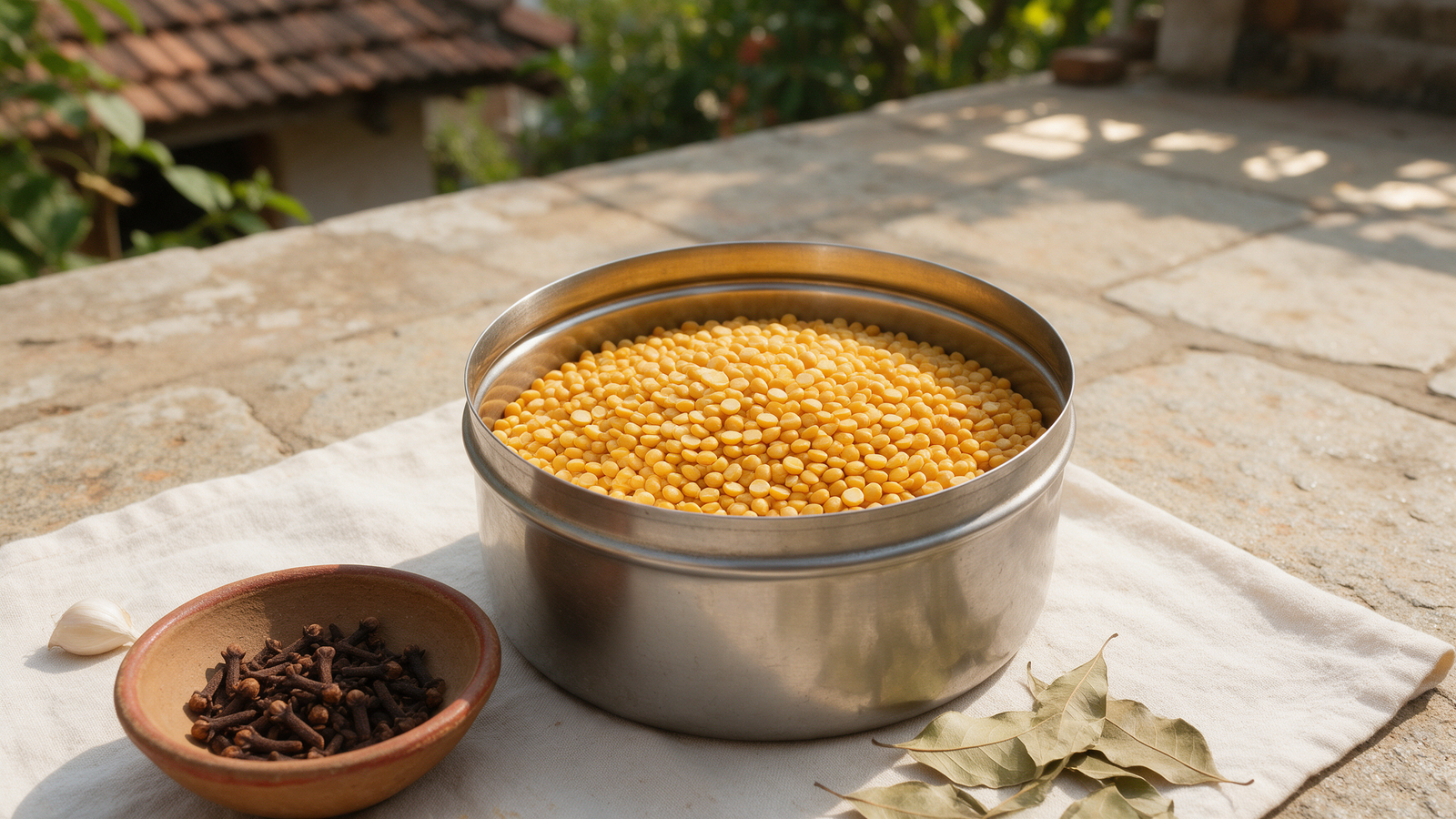
- Bay leaves (tej patta): Place 4–5 dried bay leaves in each container. Their smell keeps weevils away and does not affect the taste of the grain.
- Cloves: Put 8–10 whole cloves in a small muslin pouch and bury it in the container. Particularly good for dal.
- Dried red chillies: Whole dried red chillies, with stems on, are a classic for rice. Add 4–6 per container.
- Garlic pods: Unpeeled, dry garlic pods keep pulse beetles away from dal and chana. Replace them if they start to soften.
- Turmeric: A few pieces of whole dried turmeric, or a light coating of turmeric powder rubbed into whole pulses, protects dal. This is best for dal you will wash well before cooking.
- Mustard or castor oil coating for toor dal: Many households coat toor dal very lightly with edible oil. You may have seen “oily toor dal” in shops, which is the same idea. The thin oil layer stops beetles from laying eggs on the grain. Wash the dal well in warm water before cooking.
Repellents keep insects away. They do not kill eggs already inside the grain, which is why the drying and freezing steps come first.
Step 6: Pick the right storage spot
Where you keep the containers matters as much as what they are made of.
- Cool and dry: Keep grain away from the stove, the gas cylinder, the fridge’s back vent and any walls that get direct afternoon sun.
- Away from the sink: Cabinets under or next to the sink stay humid and invite pests.
- Off the floor: If you store bulk rice in drums or large containers, raise them on a wooden plank or stand so moisture from the floor does not seep in.
- In the dark: Light and heat speed up spoilage, and brown rice in particular goes stale faster when exposed.
How long rice and dal last in storage
Stored the right way, most grains last far longer than people expect. These are general guidelines for home storage in airtight containers:
| Grain | Airtight container, cool dry place | Notes |
|---|---|---|
| White rice (raw, basmati, sona masoori) | 1–2 years or more | Aged basmati often cooks better after a few months |
| Brown rice and red/matta rice | About 6 months | Natural oils in the bran turn rancid; refrigerate for longer life |
| Whole pulses (chana, rajma, whole moong) | 1 year or more | Very old pulses take longer to cook |
| Split dal (toor, moong, masoor, urad) | 6 months to 1 year | Split dal is more prone to beetles than whole pulses |
Food stored beyond these periods is usually still safe if it shows no insects, smell or mould, but texture and cooking time can suffer.
Monsoon storage tips
In humid regions, the monsoon is when most infestations happen. A few extra habits help:
- Sun-dry your stock before the rains begin, then seal it well.
- Buy smaller quantities during the monsoon so nothing sits open for long.
- Check containers every 2–3 weeks by pouring a little grain onto a white plate. Insects and powder are easy to spot against white.
- Add a food-safe silica gel packet (placed inside a small cloth pouch, never loose) in large rice containers to absorb extra moisture.
For more ways to protect your home during the rainy season, read our guide on removing mould from walls during the monsoon.
What to do if insects are already in your rice or dal
If you find weevils or beetles, act fast before they spread to other containers.
- Check how bad it is. If there are only a few insects and the grains look intact, the stock can usually be saved. If the grain is full of holes, powder, webbing or smells musty, throw it out.
- Sieve and sun-dry. Sieve out insects and powder, then spread the grain in direct sunlight for a few hours. Most adult insects will leave.
- Freeze it. Freeze the cleaned grain for 3–4 days to kill any remaining eggs.
- Clean the container. Wash it with hot water, dry it completely in the sun, and wipe the shelf area with vinegar water.
- Check nearby containers. Insects move between grains, flour, rava and dry fruits, so inspect everything on that shelf.
Always wash rice and dal well before cooking, and discard any grain that smells musty or shows signs of mould.
Methods to avoid
Some “old tricks” for grain storage are unsafe in a home kitchen:
- Pesticide tablets such as aluminium phosphide (sold as “celphos” or grain fumigation tablets): These release a highly toxic gas and have caused serious poisonings and deaths in homes. They are meant only for trained professionals in large warehouses. Never use them in a household kitchen.
- Mercury tablets (“paare ki goli”): Once common in villages, these contain mercury, which is toxic. Do not use them.
- Boric acid or insecticide powders mixed with food: Never mix any chemical directly into grain you will eat.
- Matchsticks: A popular tip, but the chemicals in match heads are not something you want in your food. Stick to neem, cloves and bay leaves.
Frequently asked questions
How do I keep weevils out of rice naturally?
Freeze new rice for 3–4 days, store it in an airtight container, and add dried neem leaves, bay leaves or dried red chillies. Keep it in a cool, dry spot away from the stove.
Can I eat rice that had weevils in it?
If only a few weevils were present and the grains look and smell normal, you can sieve, wash and cook the rice. Throw it out if it smells musty, is full of powder or shows mould.
How long should I freeze dal to kill insect eggs?
Keep dal in a sealed bag in the freezer for 3–4 days. Let it return to room temperature before opening it, to avoid moisture.
Do bay leaves really keep insects away from rice?
Yes. Bay leaves have a strong smell that weevils and beetles dislike. They work best alongside airtight storage, not as the only protection.
Why does brown rice spoil faster than white rice?
Brown and red rice keep their bran layer, which contains natural oils. These oils turn rancid in a few months, so store brown rice in the fridge if you want it to last longer.
Is it safe to use pesticide tablets to store grain at home?
No. Tablets like aluminium phosphide release poisonous gas and are dangerous in homes. Use drying, freezing, airtight containers and natural repellents instead.
Bad Luck ?
Insects in rice and dal are rarely bad luck. They are almost always eggs that came home with the grain and found the moisture and warmth they needed. Spend ten minutes when you bring new stock home drying, freezing and sealing it properly, and your pantry can stay pest-free through the wettest monsoon.