

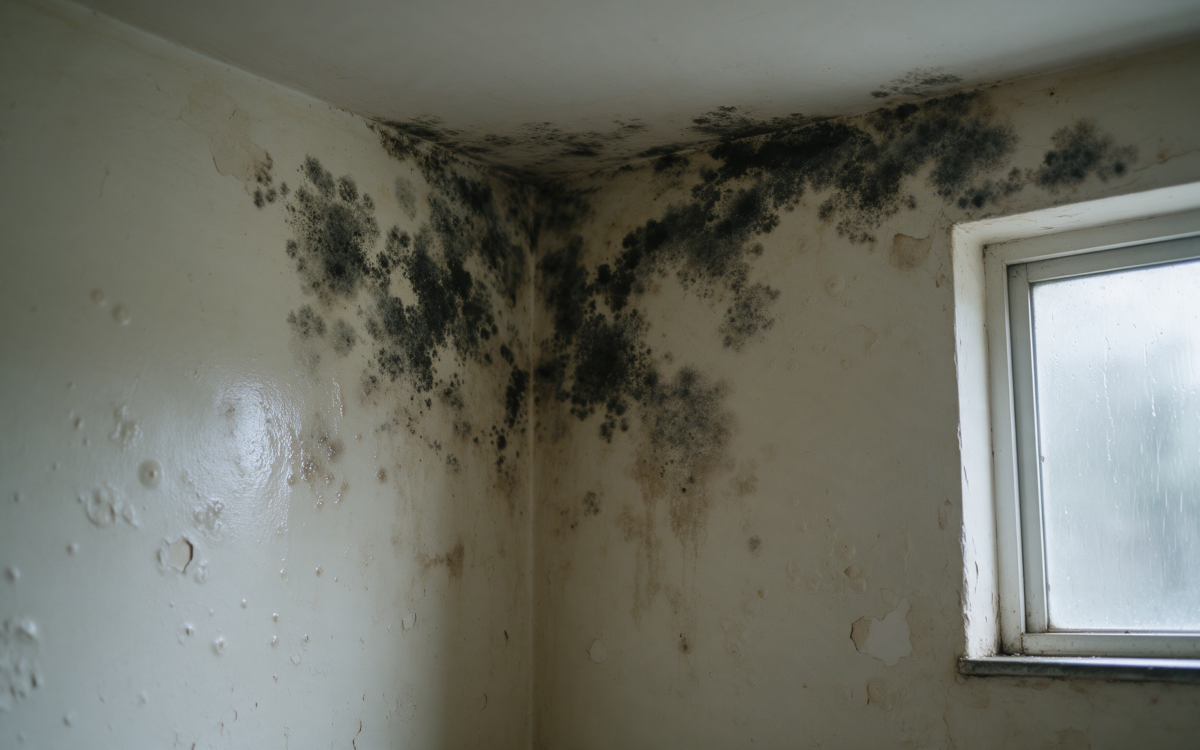
You can remove most mold from painted walls without repainting. Spray undiluted white vinegar on the patch, leave it for an hour, and wipe it off gently with a soft cloth. For stubborn spots, follow up with a baking soda paste or 3% hydrogen peroxide. The part most people miss is what comes next: unless you deal with the moisture that caused the mold, it will come back within weeks.
If you live anywhere the monsoon hits hard, like Kerala, Mumbai, Goa or the Konkan coast, you have probably seen it happen. The rains start, the air goes heavy, and a few weeks later there’s a grey-black patch creeping out of the corner of the bedroom ceiling. Behind the wardrobe is even worse. It smells musty, it looks awful, and the first thought is usually, "Great, now I have to repaint."
Usually, you don’t. Here’s what actually works.
Why walls get moldy in the monsoon
Mold is a fungus, and its spores are floating in the air all year round. They just need three things to grow: moisture, warmth and something to feed on. During the monsoon, your walls provide all three.
- Humidity: Indoor humidity in coastal India often stays above 80% for weeks during the rains. Mold starts growing comfortably once humidity stays above about 60–70%.
- Condensation: Cool walls meet warm, damp air, and tiny droplets form on the surface. You can’t always see them, but the wall stays slightly damp all day.
- Seepage: Rainwater soaks in through cracks in exterior walls, leaking terraces, gaps around windows or faulty plumbing. This is the most common cause of mold that keeps coming back in the same spot.
- Poor ventilation: Rooms that stay closed, corners behind furniture and bathrooms without an exhaust fan trap moist air right against the wall.
Paint and the dust stuck to it give mold enough to feed on. So the wall does most of the work for it.
First, check: is it mold or just a damp stain?
Not every dark patch is mold. A quick way to tell:
- Mold looks fuzzy or speckled, usually black, green or grey, and often spreads in clusters. It has a musty, earthy smell.
- Damp stains look like a flat yellowish or brownish tide mark, often with a wavy edge. The paint may bubble or flake.
- Efflorescence is a white, chalky, powdery layer caused by salts coming out of the plaster as water evaporates. It’s not a fungus at all.
The simple test: dab the spot with a cotton ball dipped in diluted bleach (one part bleach to ten parts water). If it lightens within a minute or two, it’s mold. If nothing happens, it’s likely a stain or dirt.
Before you start: stay safe
Mold spores can irritate your eyes, nose and lungs, especially when you disturb them while cleaning. Take a few minutes to set up properly.
- Wear rubber gloves, an N95 mask and, ideally, safety glasses.
- Open the windows and switch on a fan, pointed so it blows air out of the room.
- Move furniture away from the wall and cover the floor with old newspaper or a sheet.
- If anyone in the house has asthma, allergies or a weak immune system, they should stay out of the room while you clean.
- Never mix bleach with vinegar, ammonia or other cleaners. The combination releases toxic gases. Use one method at a time, and rinse the area with plain water before switching to another.
One more thing: don’t dry-brush or dry-scrape mold. It sends spores flying into the air, and they’ll settle and start growing somewhere else. Always wet the area first.
Method 1: White vinegar (the best starting point)
Plain white vinegar is the first thing to try on painted walls. It’s cheap, you probably already have some at home, and it kills many common household mold species. Unlike bleach, it soaks into porous surfaces like plaster, so it can reach mold below the surface too.
What you need: undiluted white vinegar, a spray bottle, a soft cloth or sponge.
- Pour the vinegar into the spray bottle. Don’t dilute it.
- Spray it generously on the moldy area and a little around it.
- Leave it for one hour. Don’t wipe it off early. It needs time to work.
- Wipe gently with a damp soft cloth, rinsing the cloth often so you don’t just spread the mold around.
- Let the wall dry completely. Point a fan at it if you can.
The vinegar smell fades within a few hours. Test on a small hidden patch first, because on some darker or cheaper paints vinegar can leave a slight mark.
Method 2: Baking soda paste (for stubborn spots)
Baking soda is mild, safe and slightly abrasive, which makes it good for spots vinegar didn’t fully clear. It also absorbs moisture and helps with that musty smell.
For light mold: Mix one teaspoon of baking soda in a spray bottle of water, shake well, spray on the patch and wipe it after a few minutes.
For stubborn mold:
- Make a thick paste of baking soda and a little water.
- Apply it over the mold with a soft cloth or an old toothbrush.
- Scrub gently in small circles. You’re lifting mold, not scraping paint.
- Wipe clean with a damp cloth and let the wall dry.
A lot of people use both: vinegar first to kill the mold, then baking soda to lift the leftover stain.
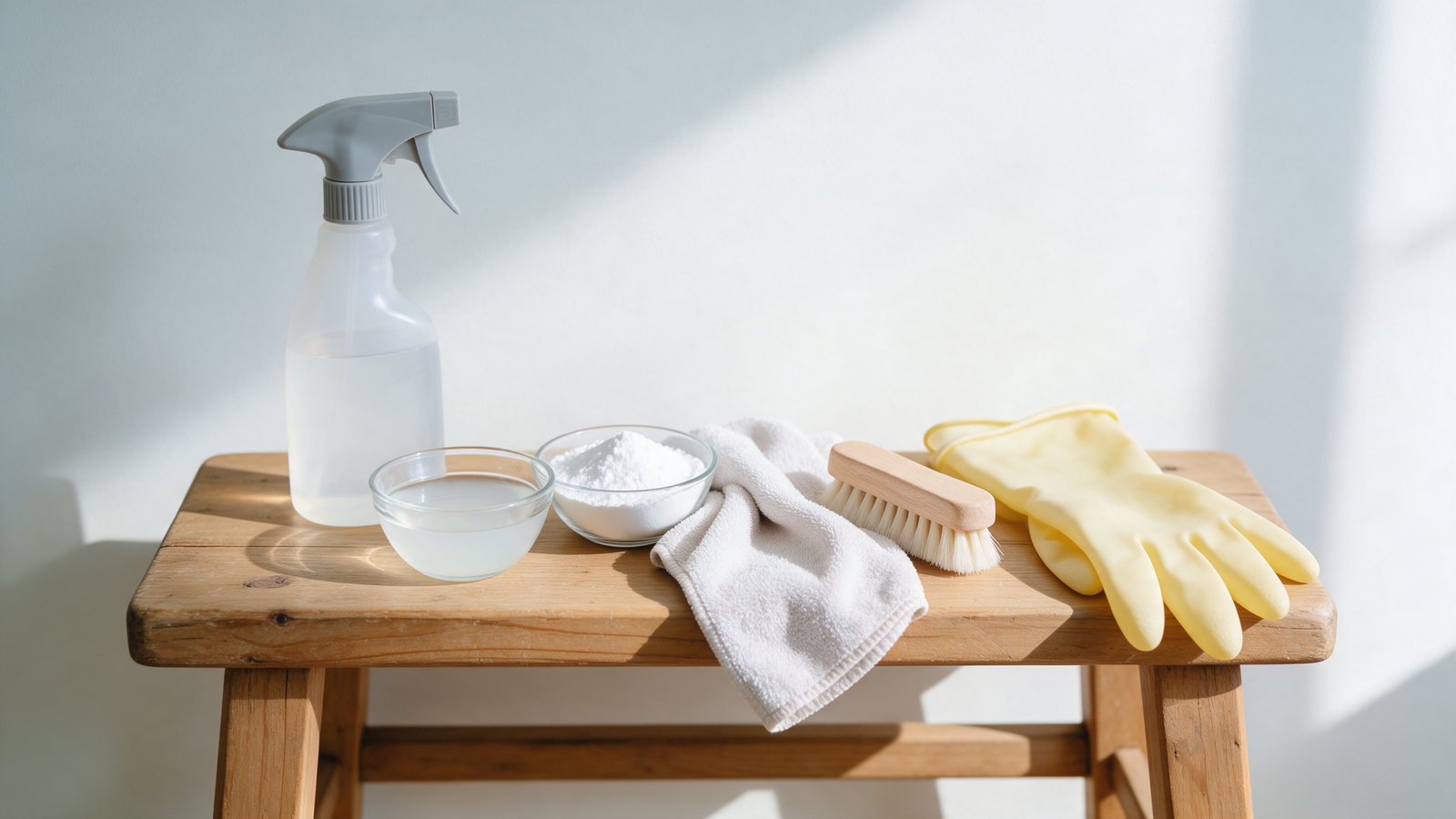
Method 3: Hydrogen peroxide (for lighter walls)
The 3% hydrogen peroxide solution sold at medical stores is a good antifungal cleaner. It also lightens the dark stain mold leaves behind.
- Pour it into a spray bottle as it is.
- Spray the mold and leave it for about 10 minutes. It will fizz a little.
- Wipe gently and let it dry.
Since peroxide has a mild bleaching effect, it works best on white or light-coloured walls. Test it on a hidden spot first if your wall is painted in a darker colour.
Method 4: Diluted bleach (for washable paint only)
Bleach does a great job of removing the black discolouration, but it has limits. It mostly works on the surface and doesn’t soak into porous plaster, so the mold underneath can survive and come back. It can also leave marks on coloured paint.
Use it only on washable, light-coloured or enamel-painted walls, like bathrooms or kitchen tiles and grout.
- Mix one part bleach with ten parts water.
- Wipe the solution over the patch with a sponge. Don’t soak the wall.
- Leave it for 10–15 minutes, then wipe with clean water.
- Keep the room well ventilated throughout.
Again: never use bleach on the same day as vinegar without rinsing thoroughly in between.
Other natural options
- Tea tree oil: Add one teaspoon to a cup of water in a spray bottle. Spray it on, and don’t rinse it off. It keeps working as a mild antifungal and leaves a fresh smell. It’s a bit expensive, but a little goes a long way.
- Borax: One tablespoon of borax dissolved in a cup of warm water works as a no-rinse mold cleaner. Keep it away from kids and pets.
- Clove oil: A few drops in water works similarly to tea tree oil, and is easier to find in Indian stores.
Quick comparison: which method should you use?
| Method | Best for | Risk to paint | Rinse needed? |
|---|---|---|---|
| White vinegar | Most painted walls, first attempt | Low (test first) | Wipe after 1 hour |
| Baking soda paste | Stubborn spots, leftover stains | Low if scrubbed gently | Yes |
| Hydrogen peroxide (3%) | White and light-coloured walls | Can lighten dark paint | Wipe after 10 minutes |
| Diluted bleach | Washable paint, bathrooms, grout | Can discolour coloured paint | Yes |
| Tea tree or clove oil | Prevention, mild mold | Very low | No |
Stop it from coming back
Cleaning the mold is the easy part. Keeping it away is where most people lose the battle, because if the moisture stays, the mold returns, often in the exact same spot. Here’s what makes the biggest difference:
- Find the source of dampness. If mold keeps coming back on one wall, especially an outer wall, near a bathroom or below a terrace, there’s almost certainly seepage. Check for cracks in the exterior wall, blocked terrace drains, broken tiles on the roof and leaking pipes. Fixing the leak is the only permanent fix.
- Let the air move. Open windows whenever it isn’t actively raining, even for an hour. Air circulation is one of the best defences against mold.
- Pull furniture away from walls. Leave a gap of at least 3–4 inches behind wardrobes, beds and sofas so air can reach the wall.
- Use exhaust fans. Run them in the bathroom and kitchen during and after bathing and cooking, for at least 15–20 minutes.
- Don’t dry clothes indoors if you can avoid it. A rack of wet clothes adds a surprising amount of moisture to a room.
- Try a dehumidifier or moisture absorber. A dehumidifier is the most effective option for badly affected rooms. Moisture-absorbing boxes or packets of calcium chloride help in wardrobes and small closed spaces.
- Wipe condensation early. If walls or windows look damp in the morning, wipe them dry before the moisture soaks in.
- Spray a light preventive coat. Once a week during the monsoon, mist problem areas with the tea tree oil solution or vinegar.
The same humidity that brings mold also ruins pantry staples, so it’s worth checking your kitchen too. Here’s our guide on how to store rice and dal long-term without insects through the rainy season.
When you actually do need to repaint (or call a professional)
Home methods work well for surface mold on sound walls. They won’t help in a few situations:
- The mold covers a large area. As a rough rule, a patch bigger than about a square metre is worth getting professionally assessed.
- The paint is bubbling, peeling or crumbling. That means water has got into the plaster itself. Cleaning won’t save it. Once the seepage is fixed and the wall has fully dried, it needs scraping, an anti-fungal primer and fresh paint.
- It keeps coming back within a week or two of cleaning, even with good ventilation. That’s a strong sign of active seepage inside the wall.
- Someone in the home has breathing problems that get worse around the mold.
In these cases, a waterproofing contractor can find where the water is getting in. Repainting without fixing that just hides the problem for a few months.
Frequently asked questions
Can I remove mold from walls without repainting?
Yes, for surface mold on walls where the paint is still intact. Vinegar, baking soda or hydrogen peroxide will clear it. You only need to repaint if the paint is peeling or the plaster is damaged.
Is vinegar or bleach better for wall mold?
Vinegar is usually better for painted walls, because it soaks into porous surfaces and is gentler on paint. Bleach is fine for washable surfaces like bathroom tiles, but mostly works on the surface.
Why does mold keep coming back on the same wall?
Almost always because of moisture from seepage, a leak or poor ventilation. Cleaning removes the mold, but only fixing the dampness stops it returning.
Is wall mold harmful to health?
It can trigger allergies, sneezing, coughing and asthma symptoms, especially in children, older people and anyone with breathing issues. It’s best to clean it early and wear a mask while doing it.
How long does vinegar take to kill mold?
Leave undiluted white vinegar on the mold for about an hour before wiping it off.
Can I mix vinegar and bleach for a stronger cleaner?
No. Mixing bleach with vinegar releases toxic chlorine gas. Use one cleaner at a time and rinse the area with water before switching.
Closing thought
Mold on your walls feels like a big job, but most of the time it’s a one-hour fix with a bottle of vinegar and a soft cloth. The real work is the boring part afterwards: open the windows, give the walls some breathing room, and find the leak if there is one. Get that right, and your walls can make it through the whole monsoon without needing a paint job.
This article is for general information. For large areas of mold, recurring seepage or health concerns, consult a waterproofing professional or doctor as needed.