

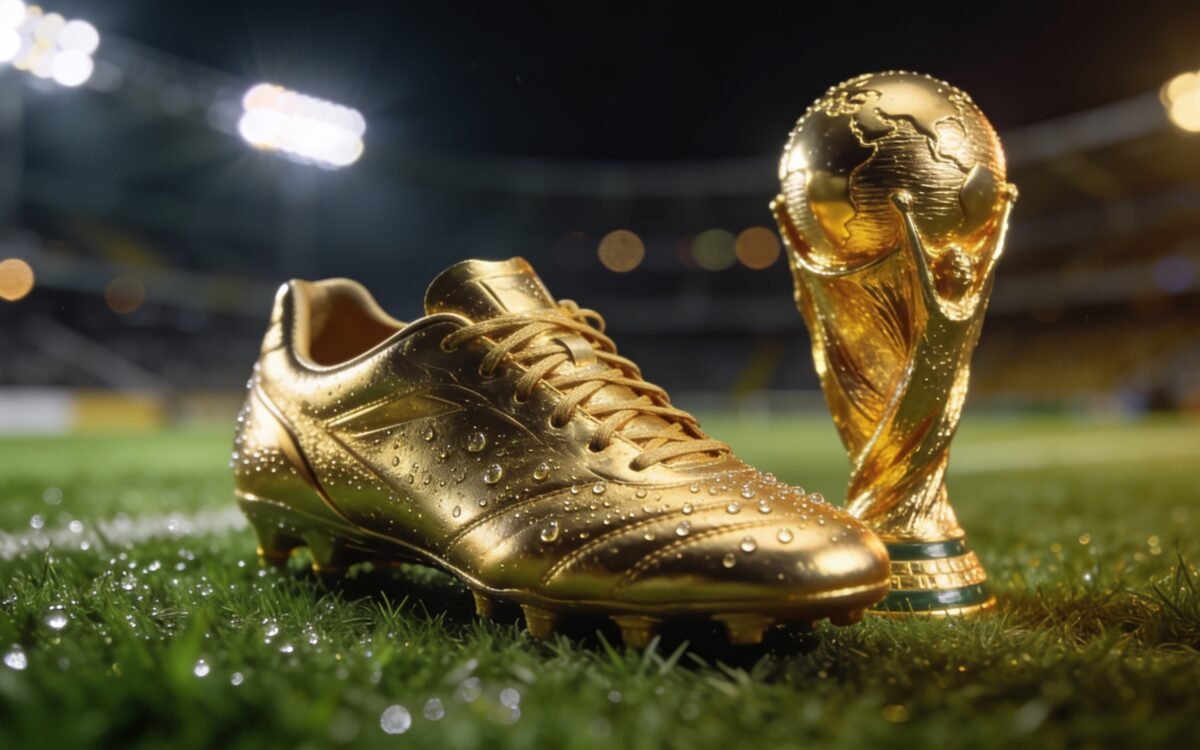
The richest footballers in the world hit a milestone in 2026 that the sport had never seen: two active billionaires at once. Cristiano Ronaldo ($1.2 billion) and Lionel Messi ($1 billion-plus) both now sit on the Forbes billionaires list, and both are playing at this summer’s World Cup, possibly against each other in a Kansas City quarterfinal that would double as the most expensive football match ever staged, at least in combined personal net worth.
Below them, the list gets more interesting than you’d expect, because the third-richest man to ever play professional football isn’t a global superstar at all. He’s a prince who mostly sat on the bench.
The richest footballers in the world in 2026
| Rank | Player | Estimated net worth | Status |
|---|---|---|---|
| — | Faiq Bolkiah | Royal family wealth (billions) | Active, inherited |
| 1 | Cristiano Ronaldo | $1.2–1.4 billion | Active (Al Nassr) |
| 2 | Lionel Messi | $1–1.1 billion | Active (Inter Miami) |
| 3 | David Beckham | ~$1 billion | Retired |
| 4 | Neymar Jr | ~$400 million | Active |
| 5 | Zlatan Ibrahimović | ~$200 million | Retired |
| 6 | Kylian Mbappé | ~$200 million and climbing | Active (Real Madrid) |
| 7 | Wayne Rooney | ~$170 million | Retired |
Figures are 2026 estimates from Forbes, Bloomberg and published rich lists; football wealth is famously hard to pin down because so much sits in private deals and image-rights structures.
The Bolkiah footnote: when the richest isn’t the best
Faiq Bolkiah is a member of Brunei’s royal family, nephew of the Sultan, and spent years in the academies of Chelsea and Leicester City. His family’s wealth runs into the tens of billions, which technically makes him football’s richest player by an absurd margin. He’s also barely played professional football. Like the royal-inheritance case on our richest cricketers list, he’s the reason honest rankings separate wealth built through the sport from wealth that merely wears boots. Everything below counts the former.
1. Cristiano Ronaldo: football’s first self-made billionaire
Ronaldo crossed the line first, officially joining the Forbes billionaires list in June 2026 with career earnings of $2.1 billion, the most any footballer has ever made. The machine behind it: the largest salary in sports history at Al Nassr ($242 million a year, tax-free, plus 15 percent equity in the club), a lifetime Nike deal worth around $1 billion, the CR7 empire of hotels, gyms and fashion, and the biggest social following of any human alive. The full anatomy is in our Cristiano Ronaldo net worth breakdown. At 41, at his sixth World Cup, he’s still adding roughly $300 million a year.
2. Lionel Messi: the equity billionaire
Messi joined the club months later, and his route there is the better business story. He turned down a reported $400 million a year from Saudi Arabia and took a smaller Inter Miami package loaded with the things that compound: Apple streaming revenue shares, Adidas lifetime royalties, and an option to buy into the club itself, which has since become the most valuable football franchise in America at $1.45 billion. His career earnings sit around $1.8 billion. Our full Lionel Messi net worth profile covers the famous napkin contract, the €555 million Barcelona deal and the MiM hotel chain. The rivalry’s money scoreboard currently reads Ronaldo, but ask again once Messi the owner replaces Messi the player.
3. David Beckham: proof retirement is where the real money starts
Beckham never earned footballing salaries near what today’s stars make, and he’s a billionaire anyway, a status Forbes confirmed recently, driven by the deal of his life: the option to buy an MLS franchise for $25 million that he negotiated into his 2007 LA Galaxy contract. That option became Inter Miami, now valued at $1.45 billion, and his stake plus the Beckham brand empire (fragrances, whisky, a Netflix hit, endorsements that never stopped) carried him past the ten-figure mark more than a decade after his last match. Every athlete’s agent has studied that contract clause since. Messi’s Miami deal is its direct descendant.
4–7. Neymar, Zlatan, Mbappé, Rooney
Neymar (~$400 million) is comfortably the richest of the rest, built from the world-record €222 million transfer era at PSG, a Saudi spell at Al-Hilal, a lifetime deal with Puma after leaving Nike, and heavy investment activity back in Brazil. Zlatan Ibrahimović (~$200 million) converted two decades of top salaries into property across Europe and a stake in Sweden’s Hammarby. Kylian Mbappé (~$200 million) is the youngest name here and the fastest riser; his Real Madrid package and unusually aggressive control of his own image rights mean he’ll likely be the third playing billionaire eventually. Wayne Rooney (~$170 million) remains England’s richest ever player from Premier League salaries banked across two decades.
What separates football money from every other sport
Two things stand out when you set this list against other sports. First, scale at the top: cricket’s richest self-made star, Sachin Tendulkar, is worth around $170 million, roughly what Wayne Rooney made, and an eighth of Ronaldo. Football’s global market simply pays differently. Second, the shape of the curve changed recently: Saudi Arabia’s league turned late-career players into the highest-paid athletes on earth, and MLS turned them into franchise owners. A great forward’s peak earning years used to end at 33. Ronaldo signed sport’s biggest contract at 40.
The pattern underneath matches every wealth list we’ve built, from YouTubers to actors: salaries make you rich, ownership makes you wealthy. Beckham proved it, Messi engineered it into his playing contract, and Ronaldo got club equity written into his.
How footballer wealth is built: the four-engine model
Every fortune on this list runs on some mix of four engines, and the mix explains the rankings better than talent does. Salaries set the floor: Europe’s elite clubs pay €10 to 30 million a year net to superstars, Saudi clubs now pay five to ten times that, which is the single biggest reason Ronaldo’s curve went vertical after 2022. Boot and kit deals are the second engine, and the lifetime contracts matter most: Nike’s arrangement with Ronaldo and Adidas’ with Messi each reportedly approach ten figures across their spans, paying out decades after retirement. Image rights and endorsements form the third, where the top two operate in their own tier: each banks roughly $60 to 90 million a year off the pitch, more than most entire squads earn on it.
The fourth engine, ownership, is the newest and the one reshaping this list. Beckham’s Inter Miami stake made him a billionaire; Messi negotiated a version of the same option; Ronaldo took 15 percent of Al Nassr; Mbappé bought French club Caen outright while still playing. Twenty years ago a footballer’s wealth peaked at retirement. The current generation is structuring deals so it peaks a decade after.
The World Cup effect on football’s rich list
This summer’s tournament in North America is quietly a financial event for everyone on this table. World Cups reset commercial hierarchies: a deep run adds measurable value to a star’s endorsement rates for the following cycle, and this one, hosted in the sport’s biggest untapped consumer market, amplifies everything. Analysts tracking the tournament expect Messi- and Ronaldo-linked merchandise and licensing to spike through the knockout rounds, and every appearance deepens MLS’s value, which flows straight into the Miami equity both Beckham and (eventually) Messi hold.
There’s also a generational handover being priced in real time. Mbappé, Bellingham, Haaland and Yamal are the names global brands are rotating budgets toward as the old duopoly plays its last tournament. Haaland’s twenty-year Nike deal and Bellingham’s Adidas contract are structured with lessons learned from watching Ronaldo and Messi’s lifetime arrangements compound. The next version of this list is being negotiated right now, in the middle of the tournament everyone’s watching for other reasons.
Highest-paid is not richest: reading the list correctly
One trap this table sets for casual readers: it measures accumulated wealth, not current salary, and the two rankings look completely different. Mbappé and Erling Haaland hold the biggest club contracts in Europe, yet both sit far below retired men like Beckham, because net worth is a stock and salary is a flow. A 27-year-old three years into peak earnings simply hasn’t had time to compound, however large the paychecks.
The flow-versus-stock distinction also explains the list’s strangest optics: Ronaldo earns roughly six times what Messi does per year right now, yet their fortunes sit only 20-odd percent apart, because Messi’s Barcelona years banked earlier money that has been working longer. Give any fortune a decade’s head start and it takes historic paychecks to close the gap. Football pays like nothing else on earth, but arithmetic still runs the table.
Frequently asked questions
Who is the richest footballer in the world in 2026?
Cristiano Ronaldo, at an estimated $1.2–1.4 billion, with career earnings of $2.1 billion. Brunei royal Faiq Bolkiah is wealthier on paper but through inheritance, not football.
Is Messi a billionaire?
Yes. Bloomberg and Forbes both placed Lionel Messi’s net worth above $1 billion in 2026, making him and Ronaldo football’s first billionaire duo.
How did David Beckham become a billionaire after retiring?
Mainly through Inter Miami, the MLS club he founded using a $25 million franchise option from his 2007 playing contract. The club is now valued around $1.45 billion.
Who is the richest active footballer after Ronaldo and Messi?
Neymar, at roughly $400 million, from his PSG and Al-Hilal contracts, a lifetime Puma deal and business investments.
Will Mbappé become a billionaire?
He’s the strongest candidate among younger players: around $200 million already at 27, with Real Madrid’s biggest package and full control of his image rights.
How much are Ronaldo and Messi worth combined?
Roughly $2.2–2.5 billion between them in 2026, with combined career earnings near $4 billion.
Wealth figures are estimates compiled from Forbes, Bloomberg and published rich lists and may differ from actual private holdings.